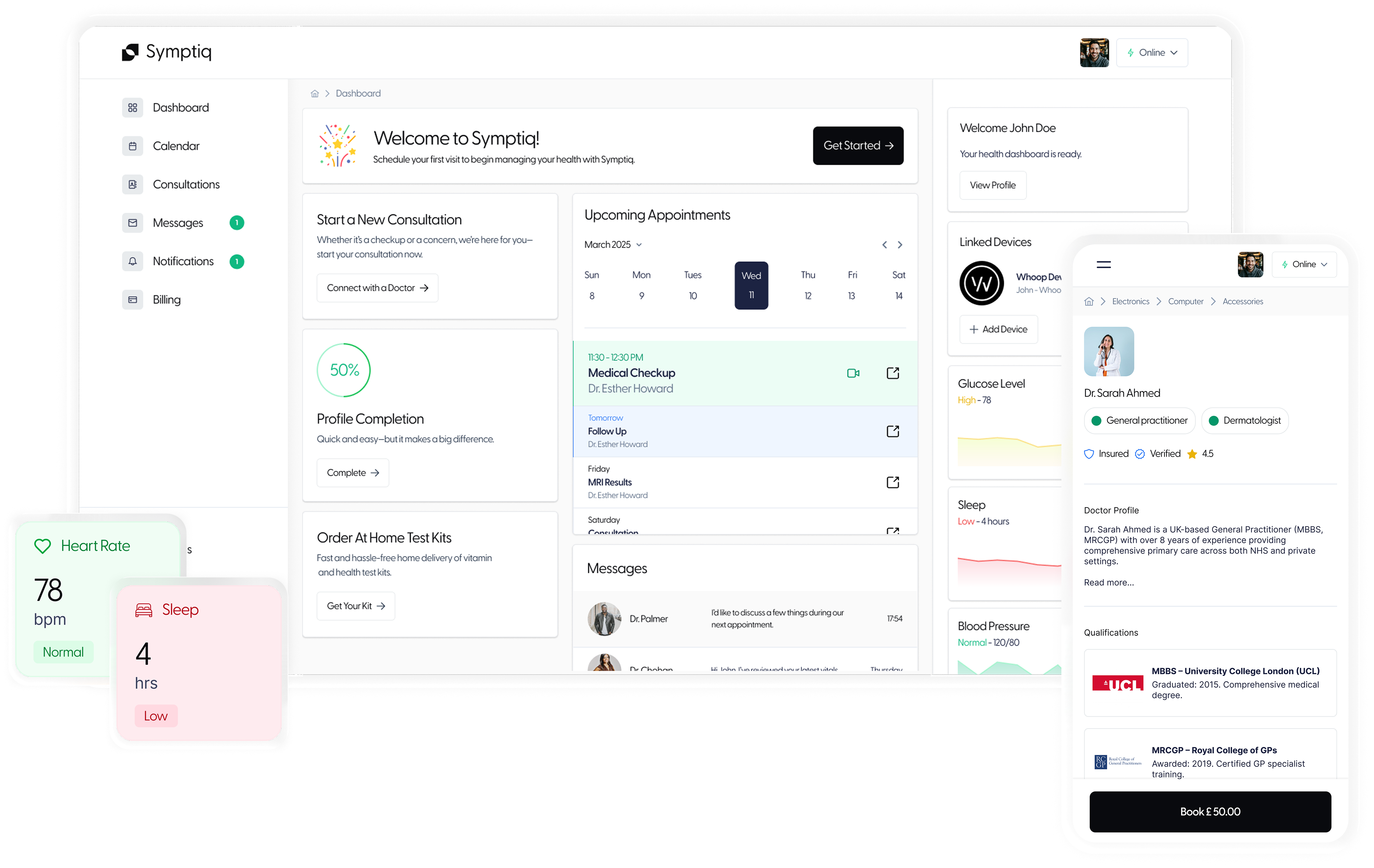

Symptiq
TL;DR
Symptiq was an internal concept for a modern healthcare platform built around patients, physicians, and AI-assisted documentation.
As the product’s first designer, I worked closely with two founders to turn this early stage concept into a connected healthcare MVP, spanning patient onboarding, consultation booking, doctor workflows, AI clinical notes, and a scalable design system.
My Role
Product Designer
Timeline
2025-2026
Team
Managing director/co-owner
Developer/co-owner
Product designer
Tools
Figma
Background
Rethinking Connected Healthcare
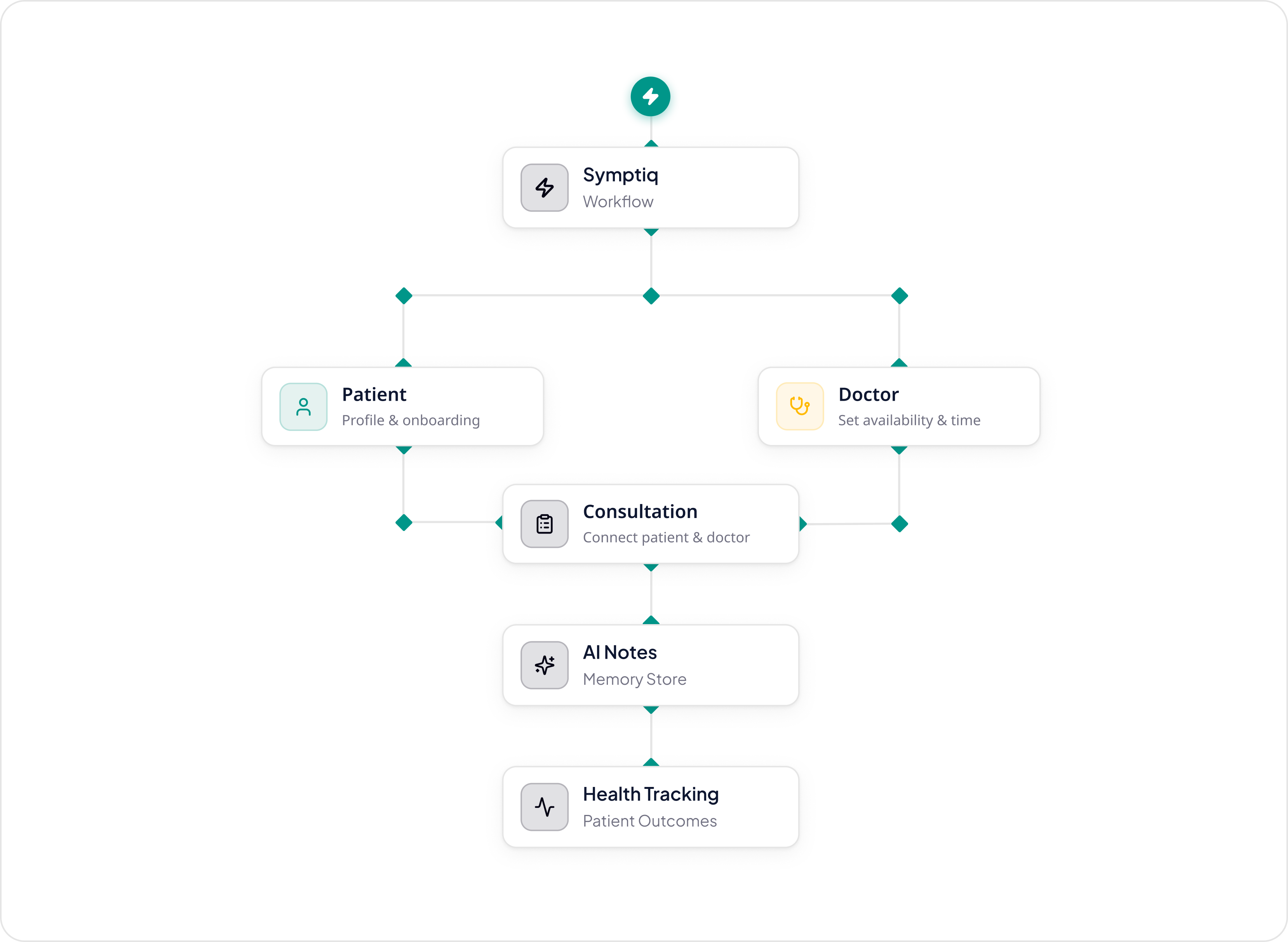
Most healthcare platforms focus on a single touchpoint. Symptiq explored a more connected approach, bringing consultations, scheduling, AI-assisted clinical documentation, and patient health tracking into one experience. As the product designer, I defined the core MVP experience, designing the platform's primary workflows across both patient and provider journeys.
Problem
Four friction points across the care journey
I audited existing telehealth products, mapped patient and provider workflows, and identified recurring friction throughout the healthcare experience. The issues extended beyond individual screens. They revealed disconnected systems that made care feel fragmented.
Fragmented healthcare journeys
Patients moved between separate tools for booking, consultations, prescriptions, and follow-up.
Administrative burden for clinicians
Doctors spent significant time documenting and managing information instead of focusing on care.
Limited continuity
Most platforms treated consultations as isolated events, offering little support for long-term monitoring/follow ups.
Trust depended on transparency
Patients needed confidence in providers, while providers required a secure verification process.
User patterns
Patients
Continuous CareWanted healthcare to feel connected, from finding a doctor and booking appointments to accessing consultation history and monitoring their health over time.
Providers
clinical efficiencyNeeded streamlined workflows that reduced administrative overhead while keeping patient records, schedules, and consultation notes accessible in one place.
Process
Designing a connected healthcare ecosystem
Designing the Patient Journey
A guided journey from onboarding to continuous health tracking.
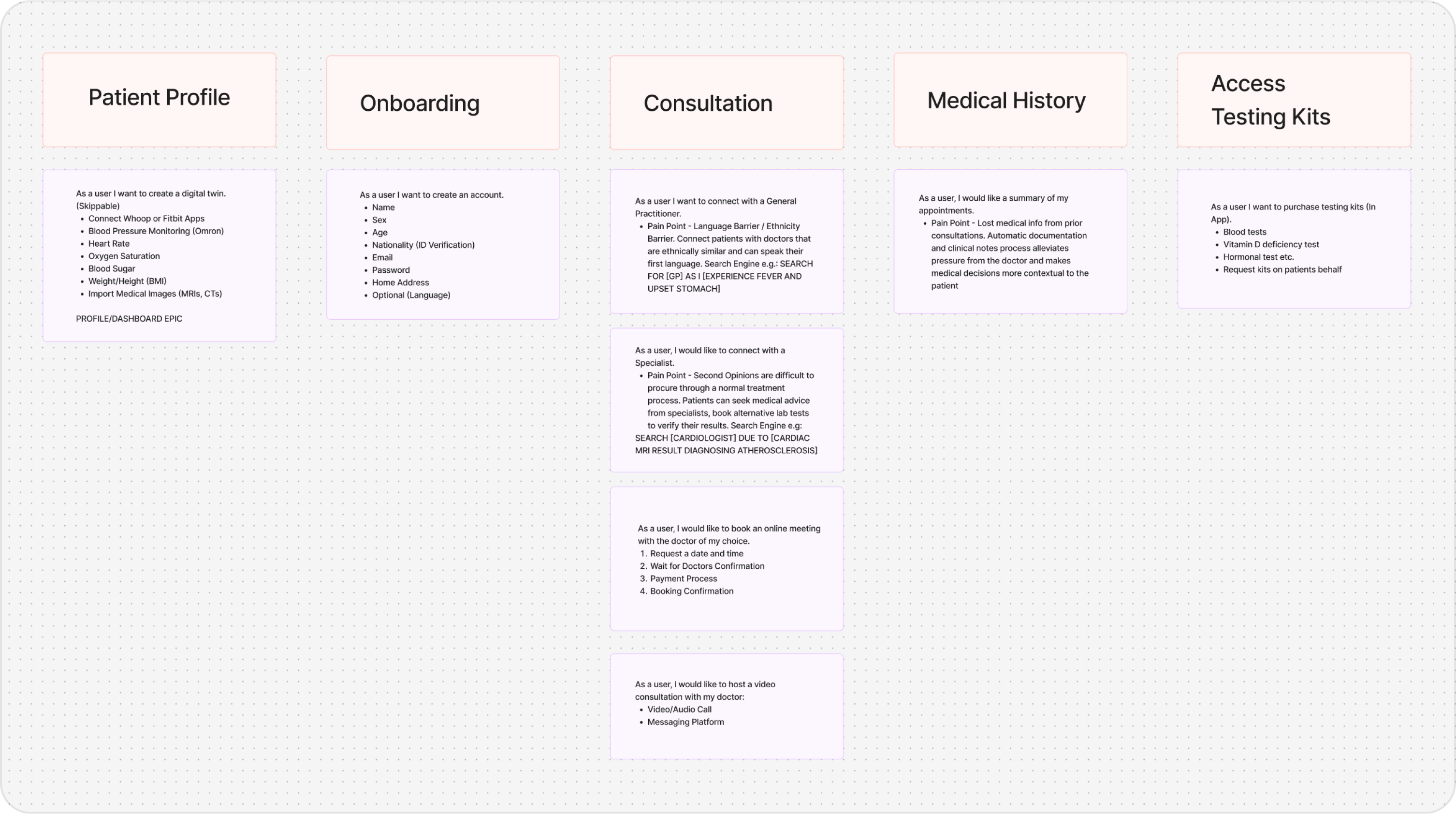
Early explorations
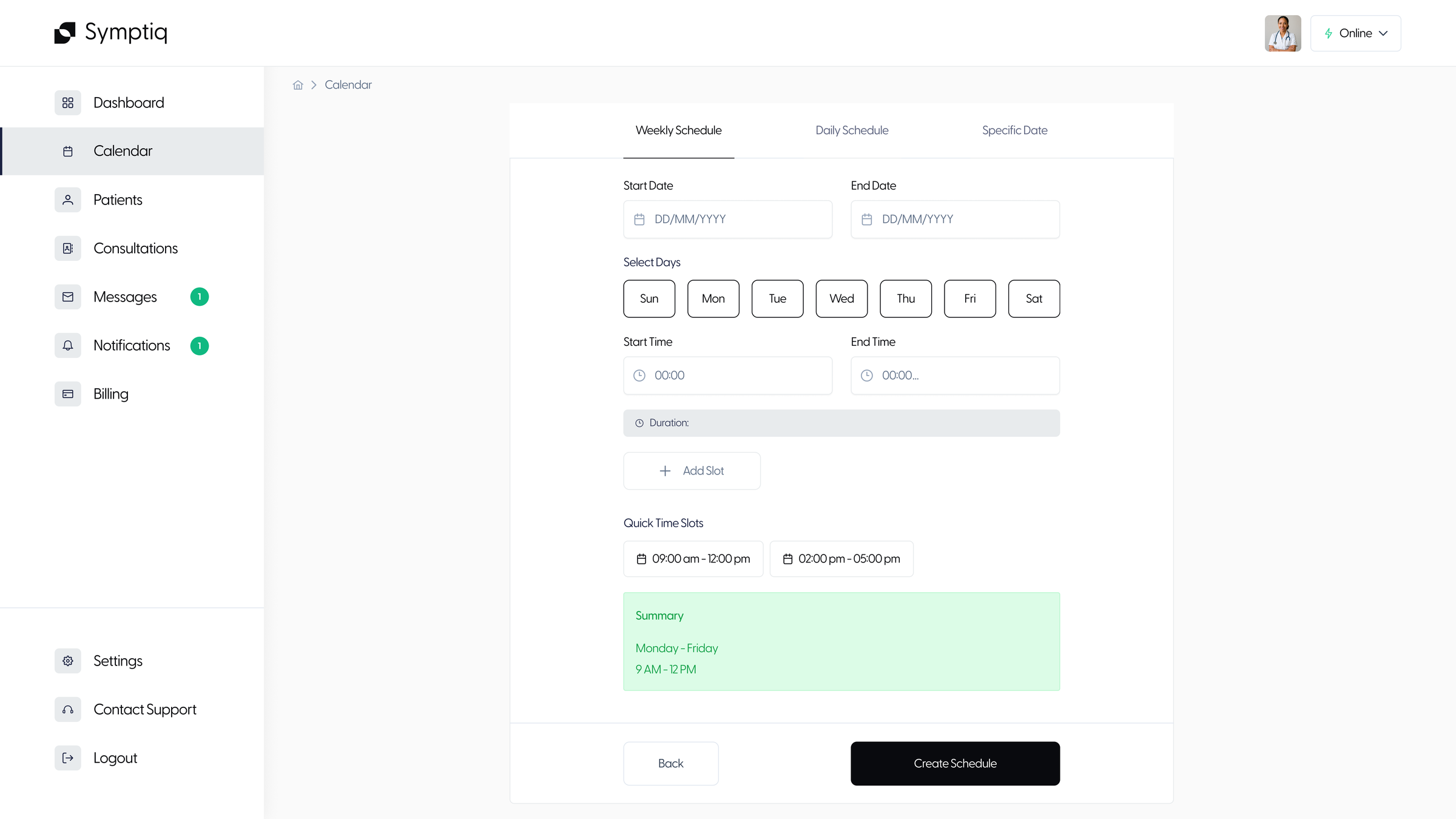
Streamlining Clinical Workflows
Helping doctors manage care with less administrative friction.
hover to zoom
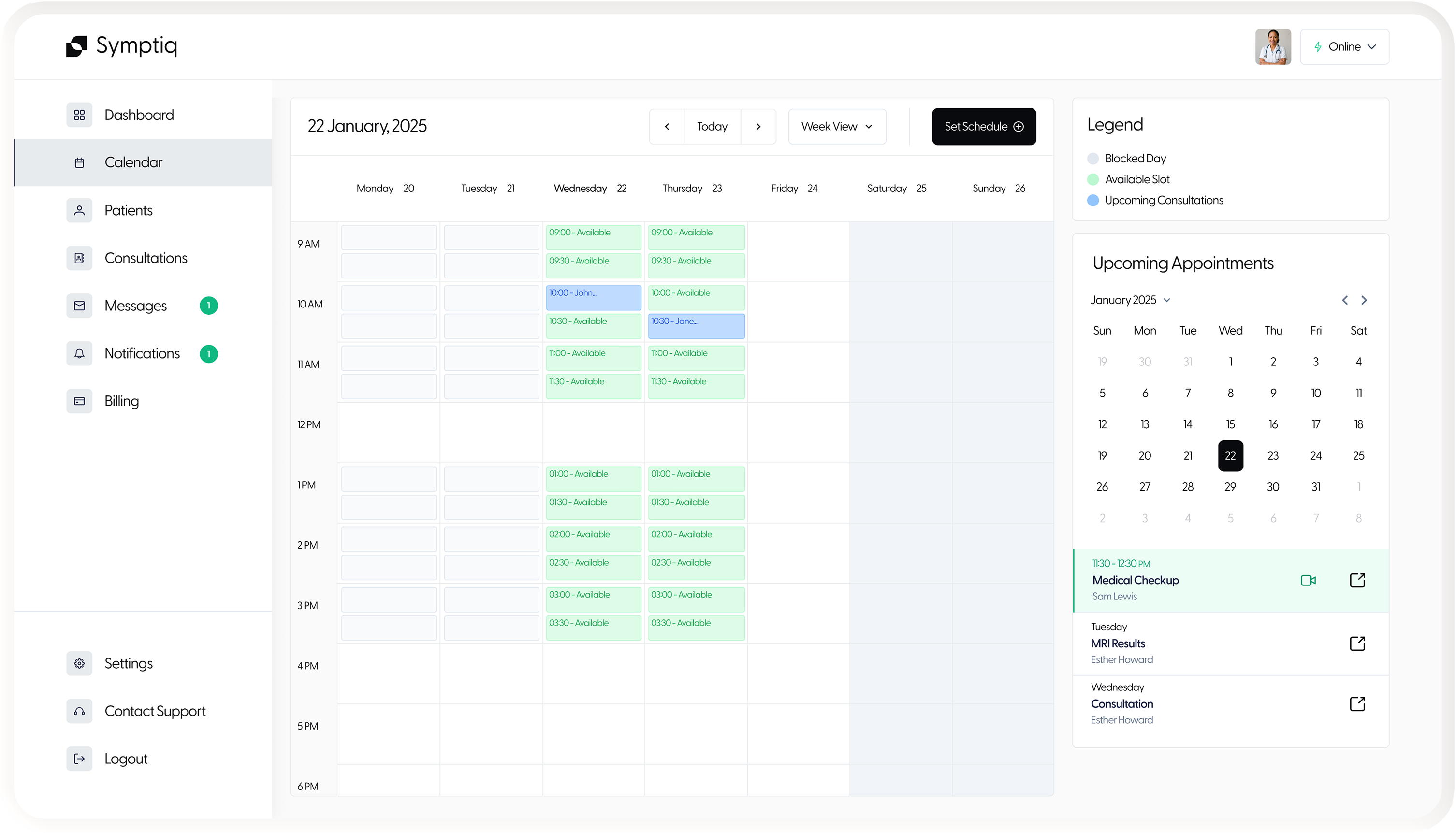
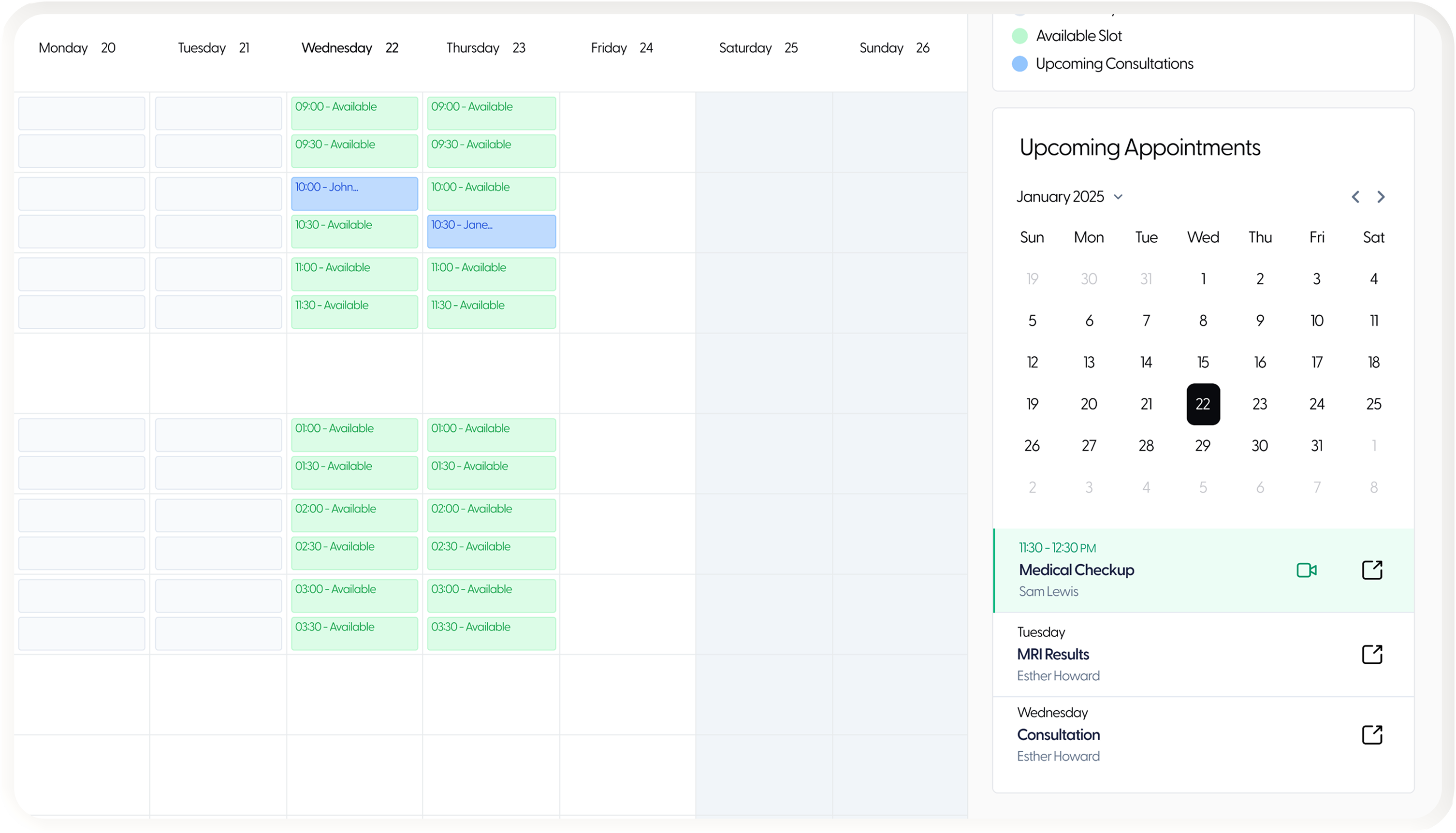
Calendar View
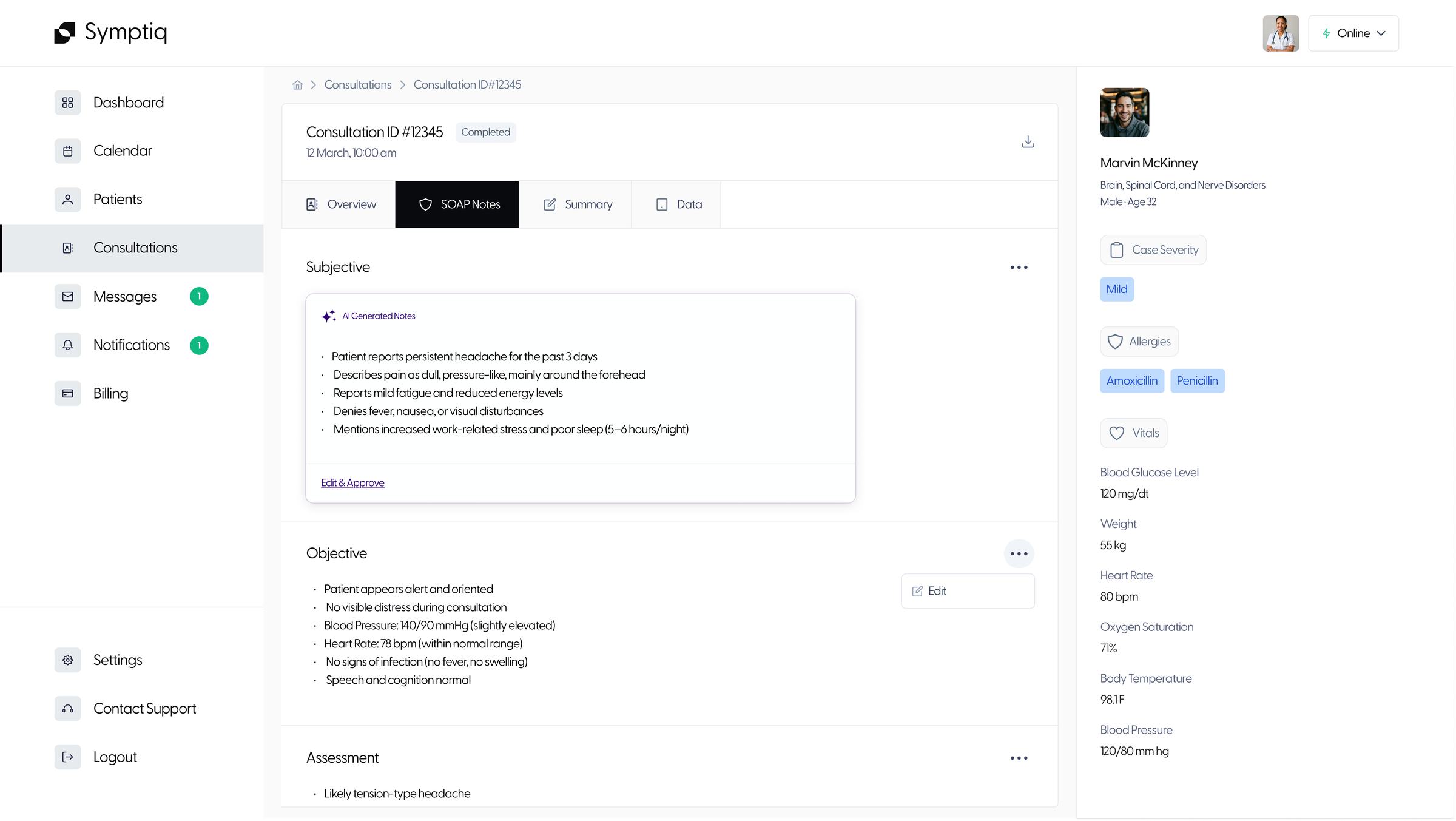
Integrating AI into Clinical Documentation
Turning conversations into structured clinical insights.
hover to zoom
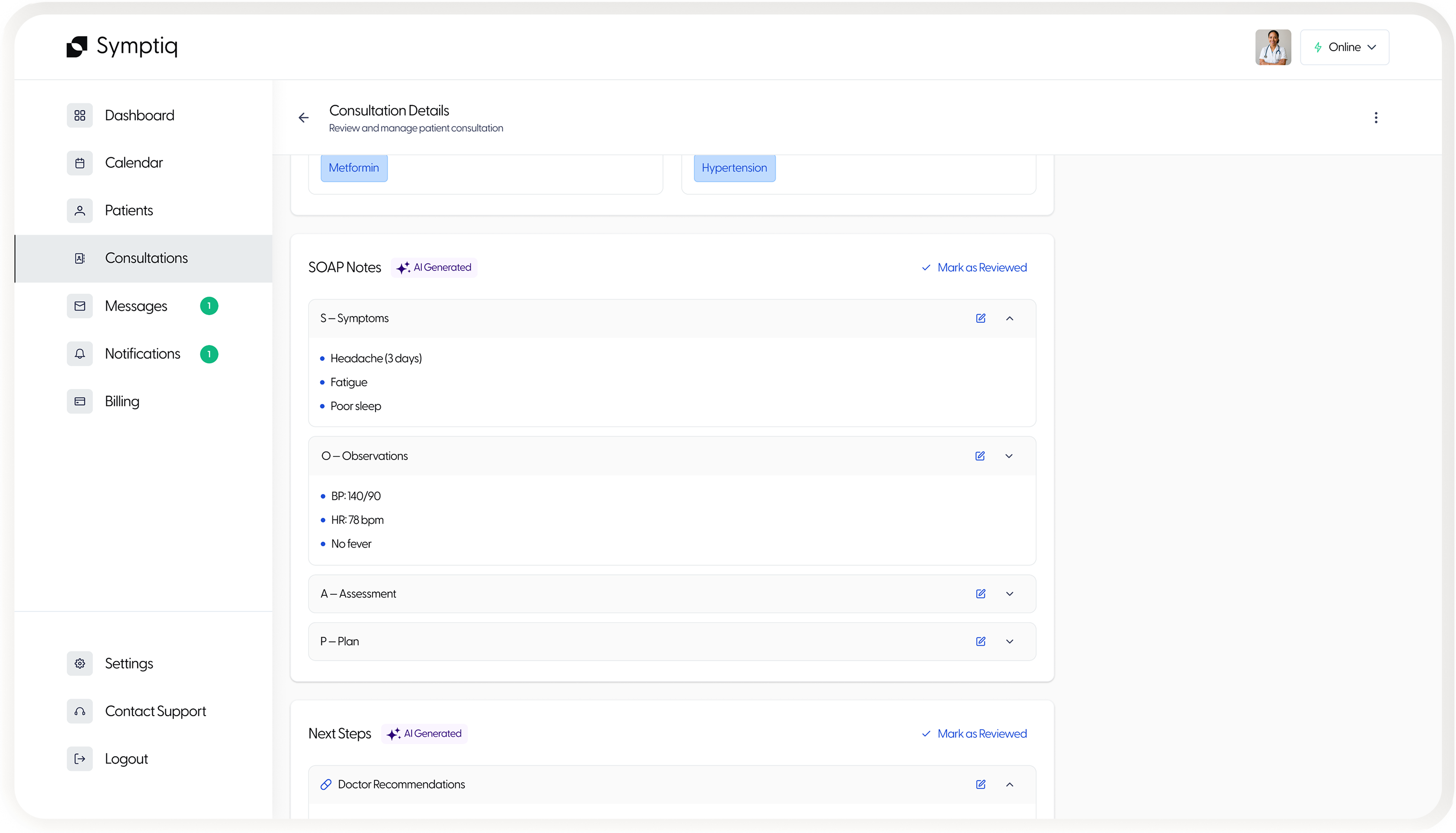
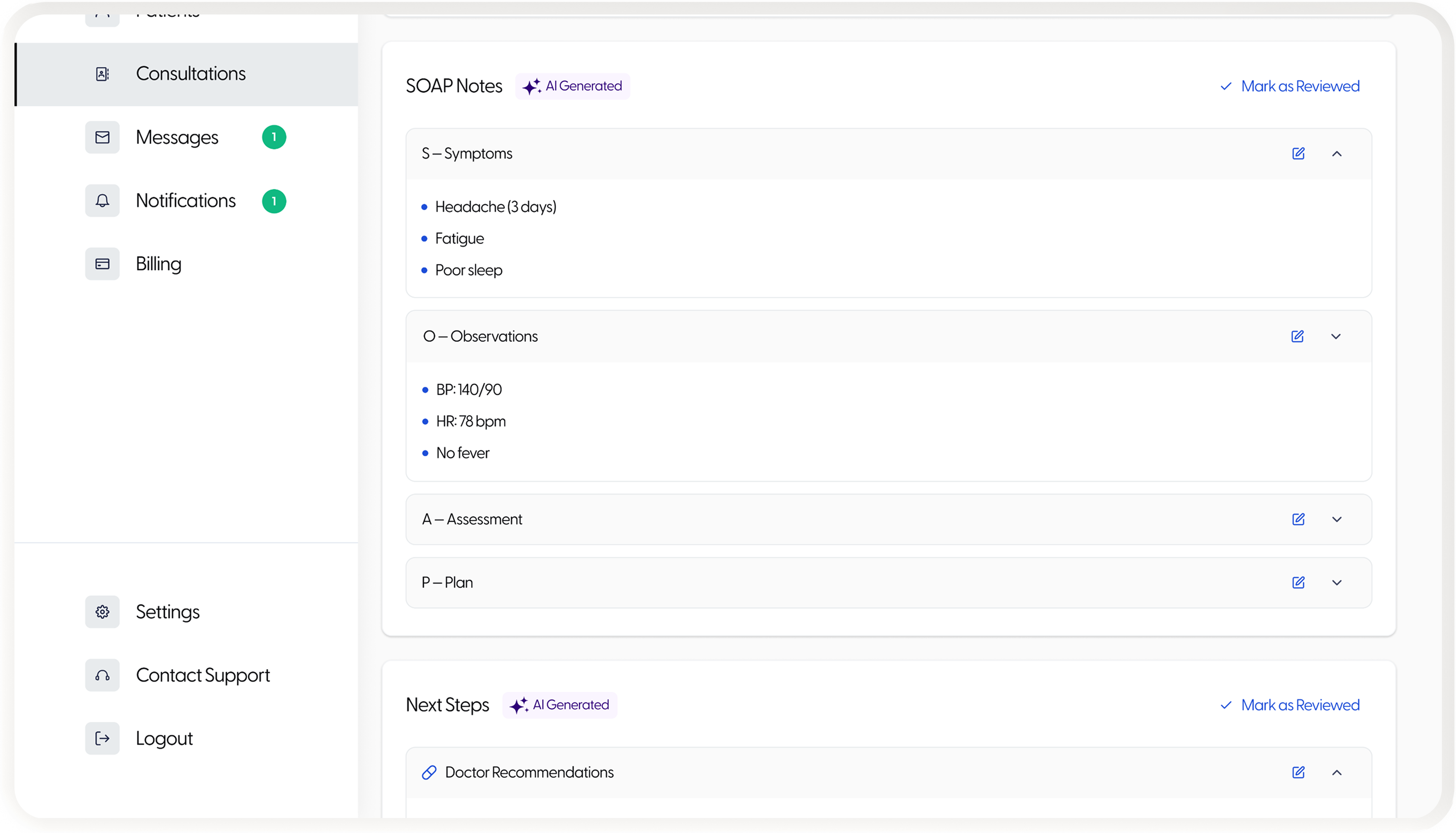
SymNotes (AI-assisted SOAP notes)
Final Product
One Platform. Every Stage of Care
Building trust from the first interaction
Every interaction begins before a patient creates an account. The visual identity was designed to communicate professionalism, clarity, and confidence while remaining approachable for both patients and healthcare providers.
Typefaces
Buttons
Colors
Neutral
#ffffff
#fafafa
#e8ebed
#c5c6d0
#333333
#090a0e
#000000
Slate
#e2e8f0
#94a3b8
#64748b
#5b627e
#334155
#1e293b
Navy
#3a415e
#1c2342
Primary
#538dff
Success
#10b981
#2c5a41
Surface
#eff0fa
Scroll to reveal
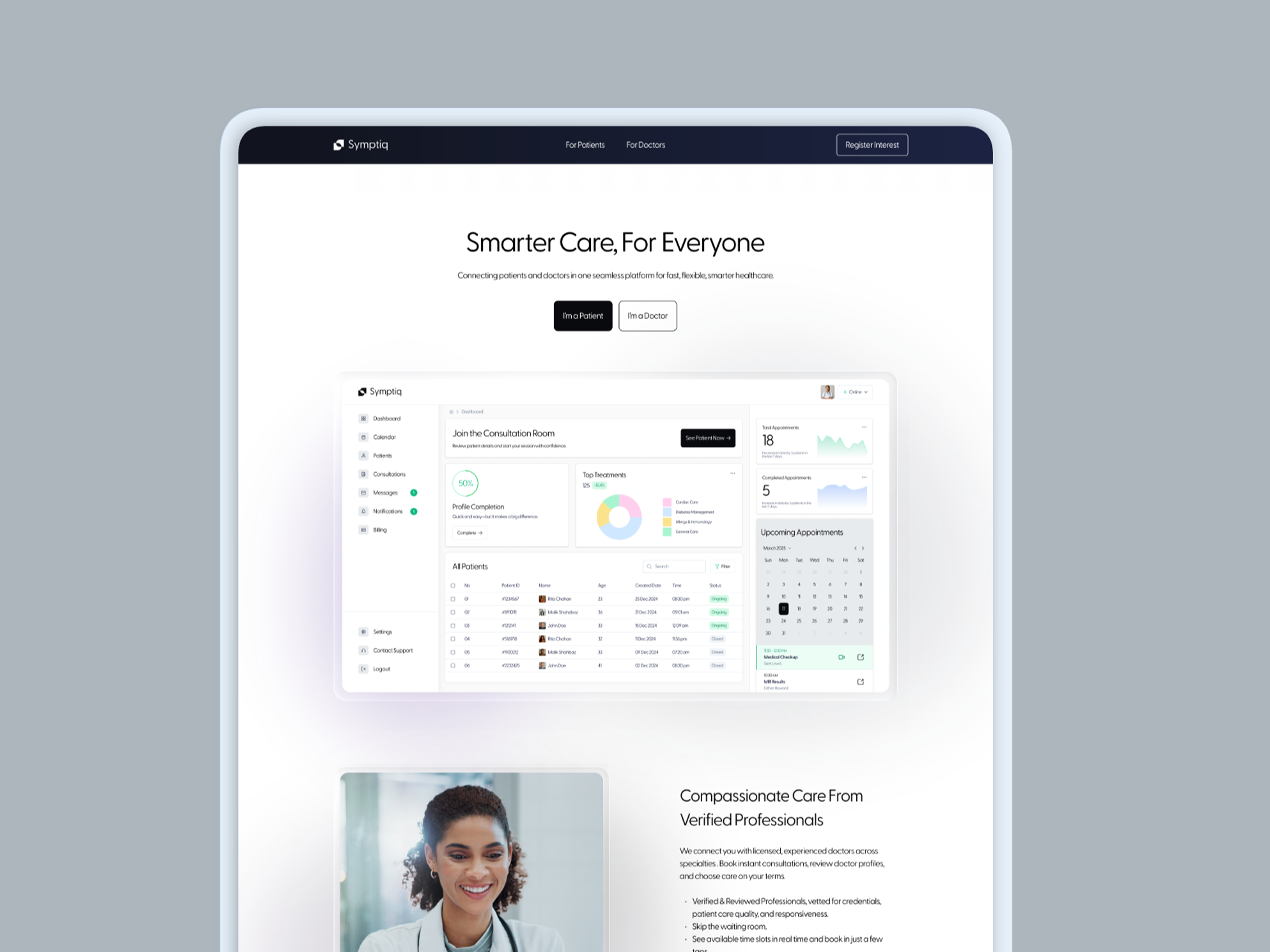
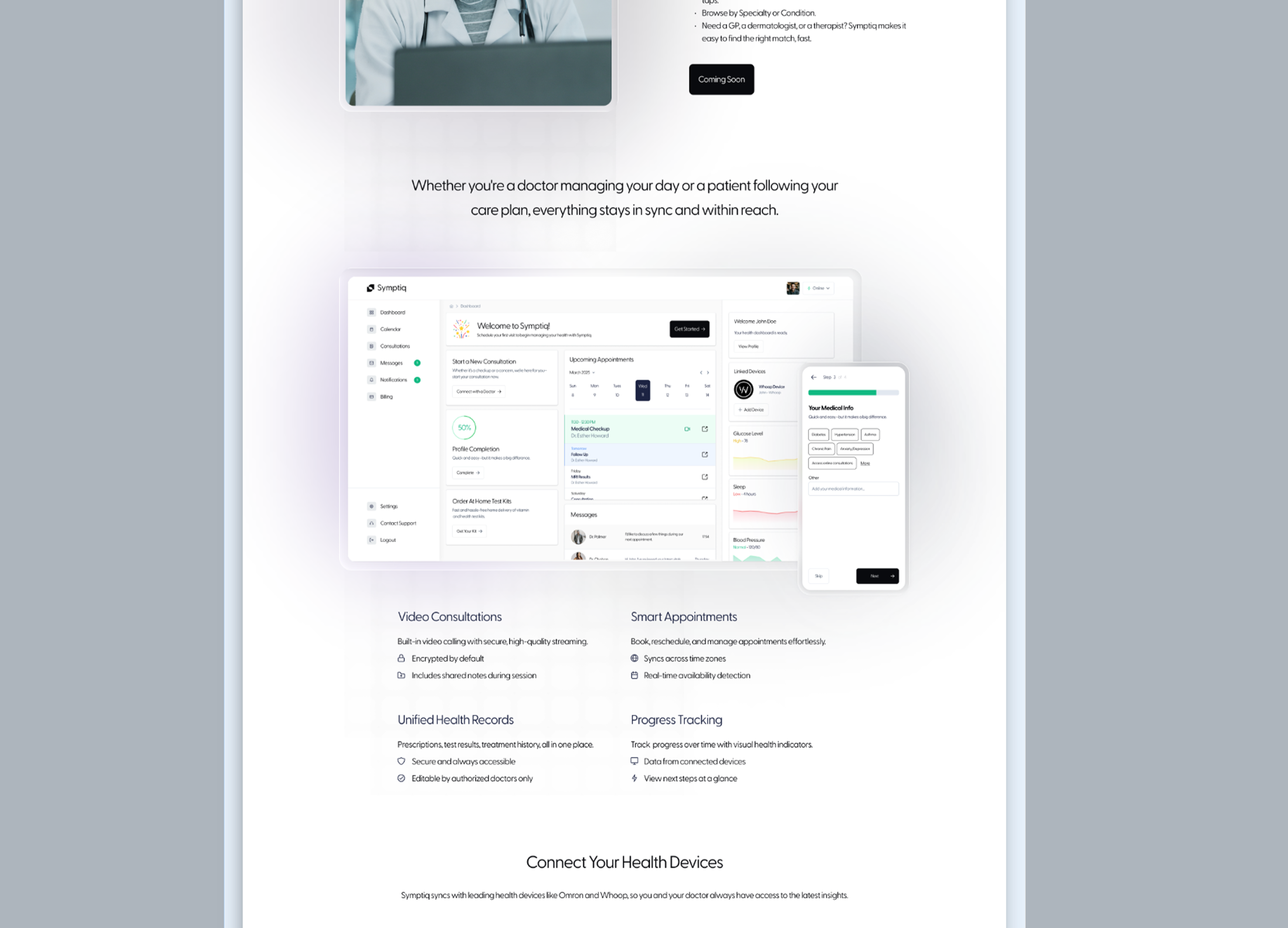
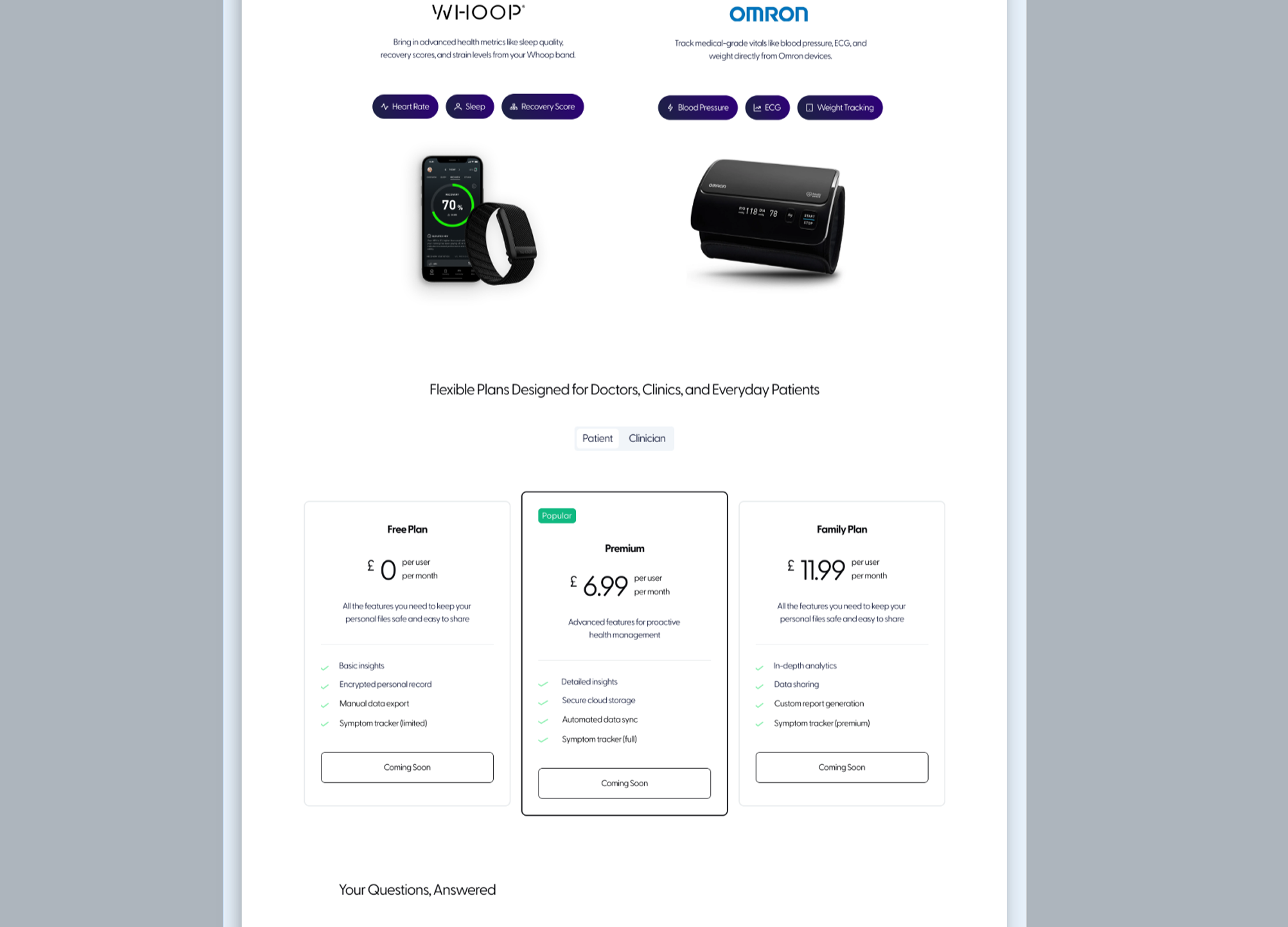
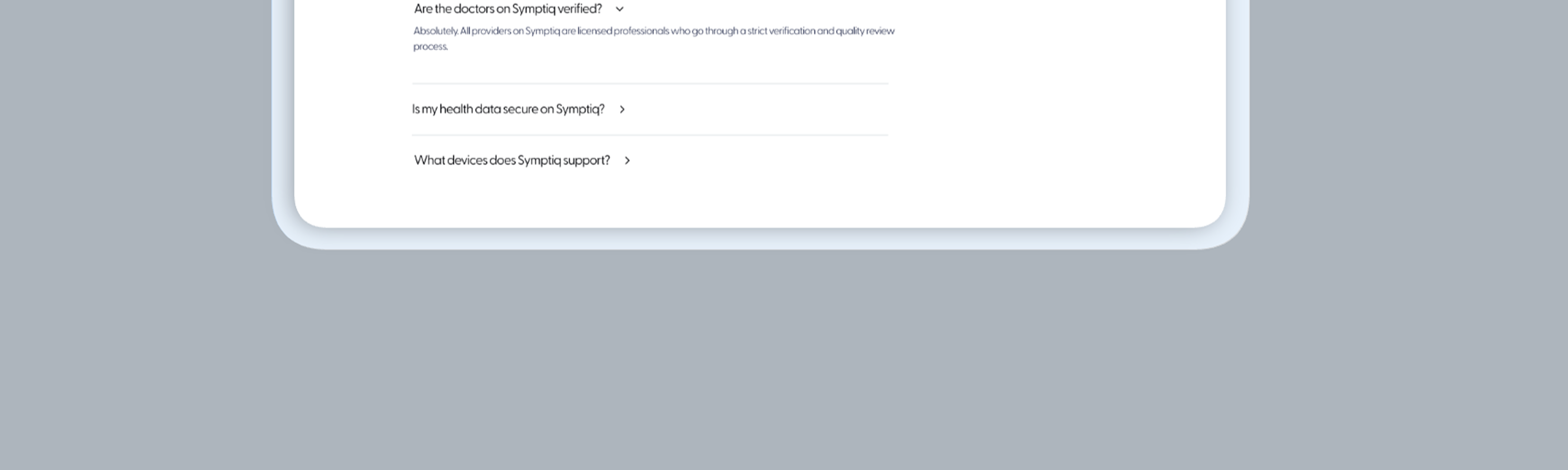
Landing Page
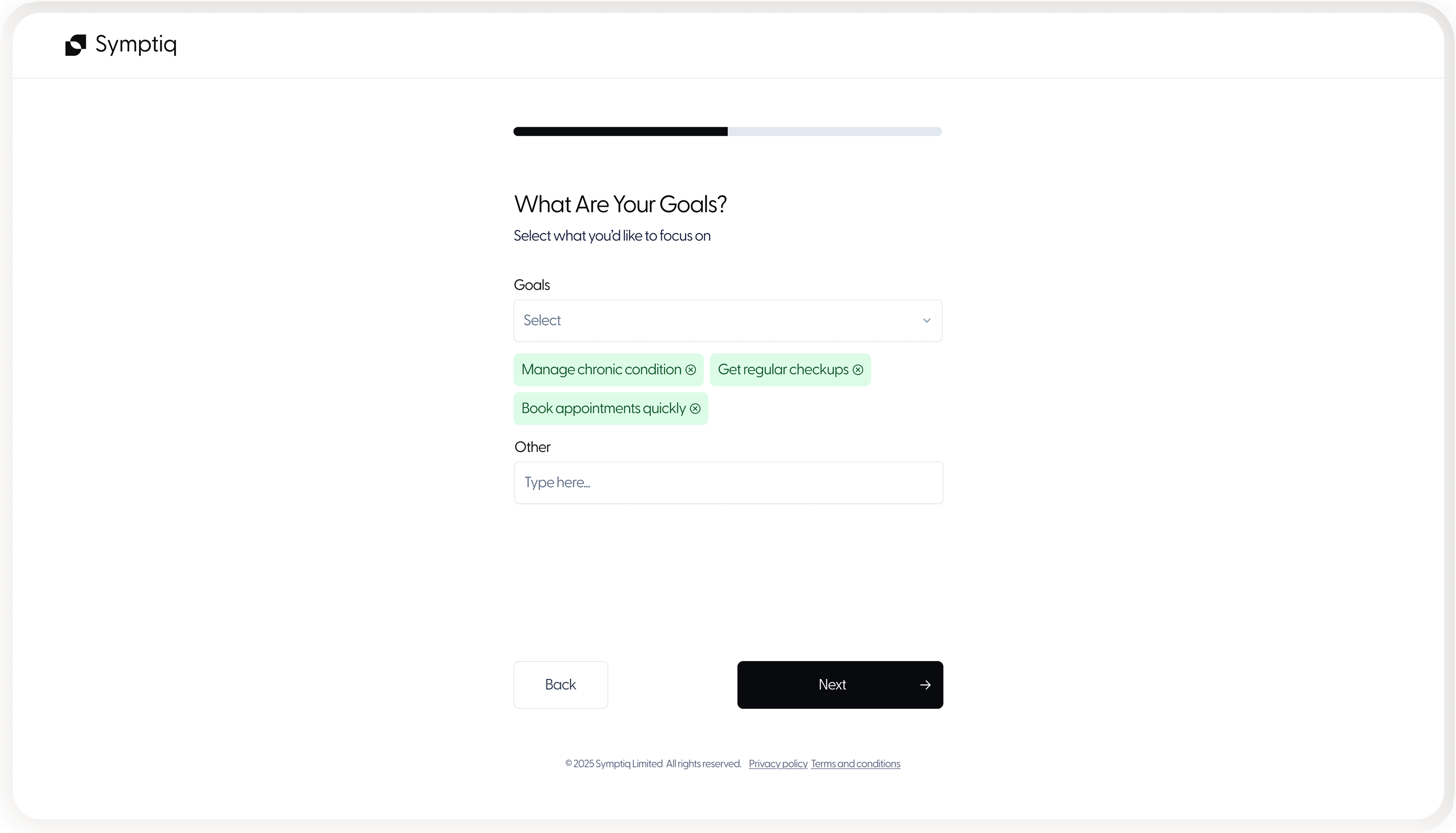
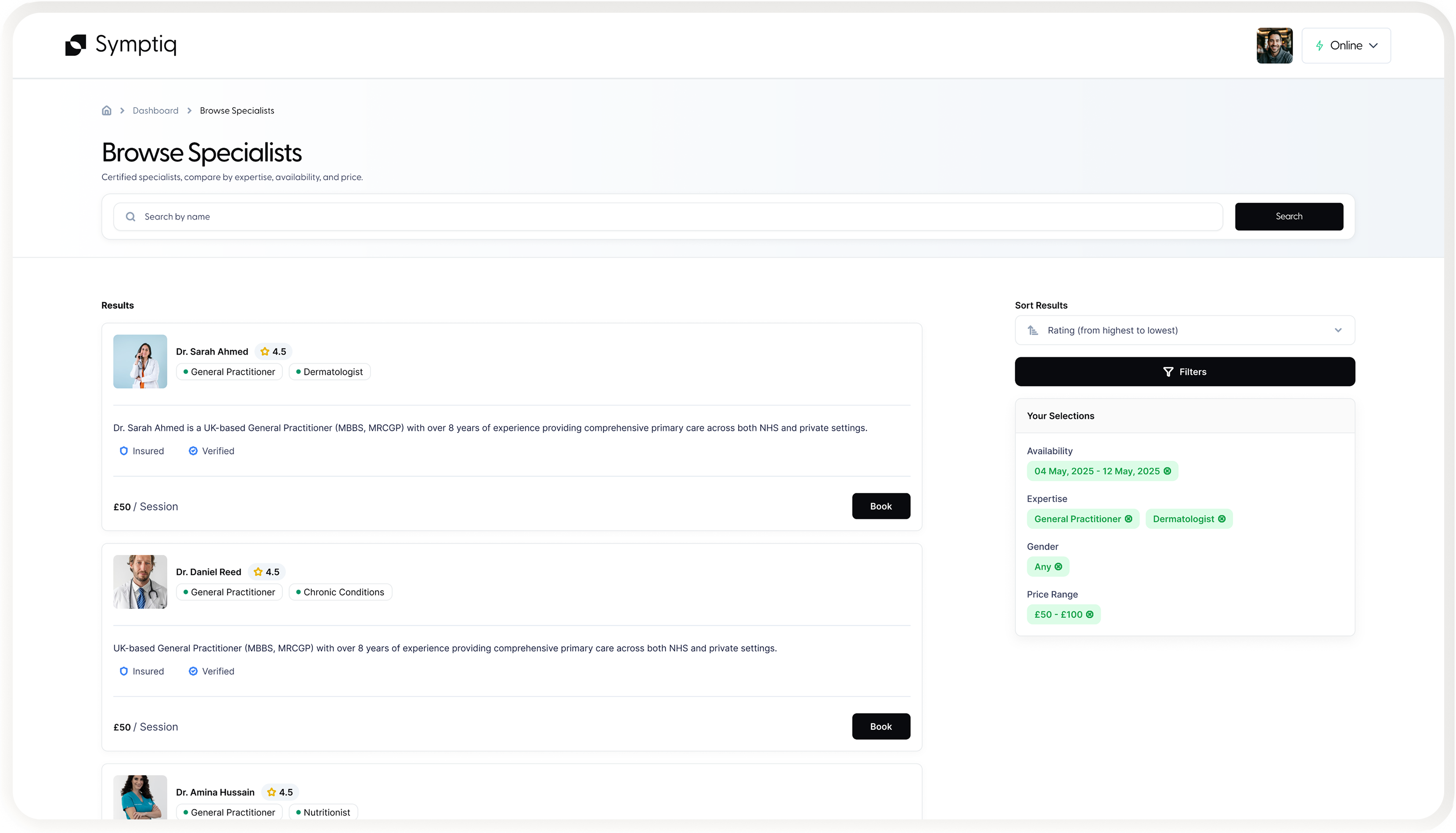
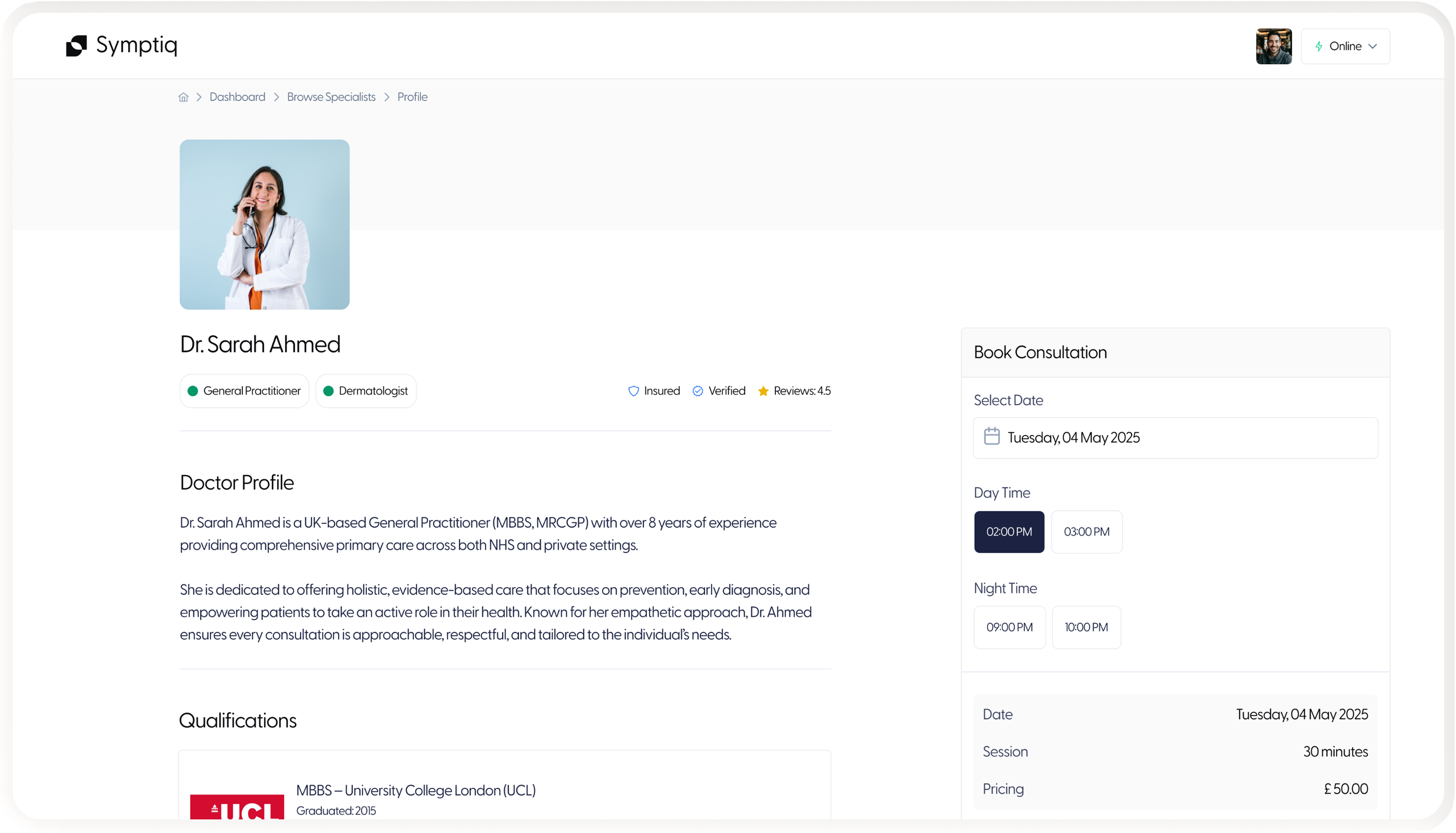
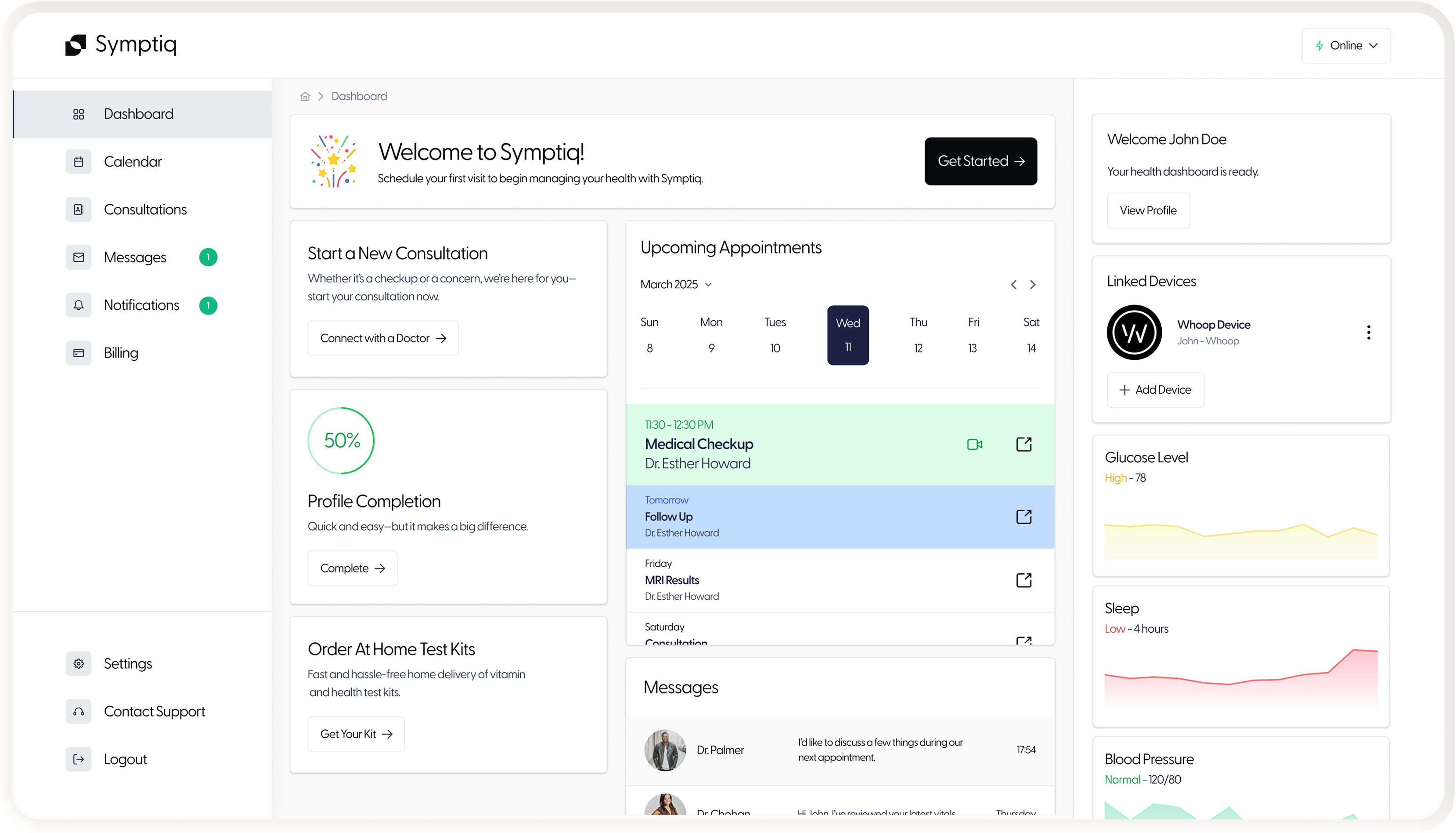
A guided patient experience
The patient experience was designed as a continuous journey rather than a collection of isolated tasks. From onboarding and scheduling to consultations and health tracking, every step builds on the previous one to reduce friction and create continuity throughout care.
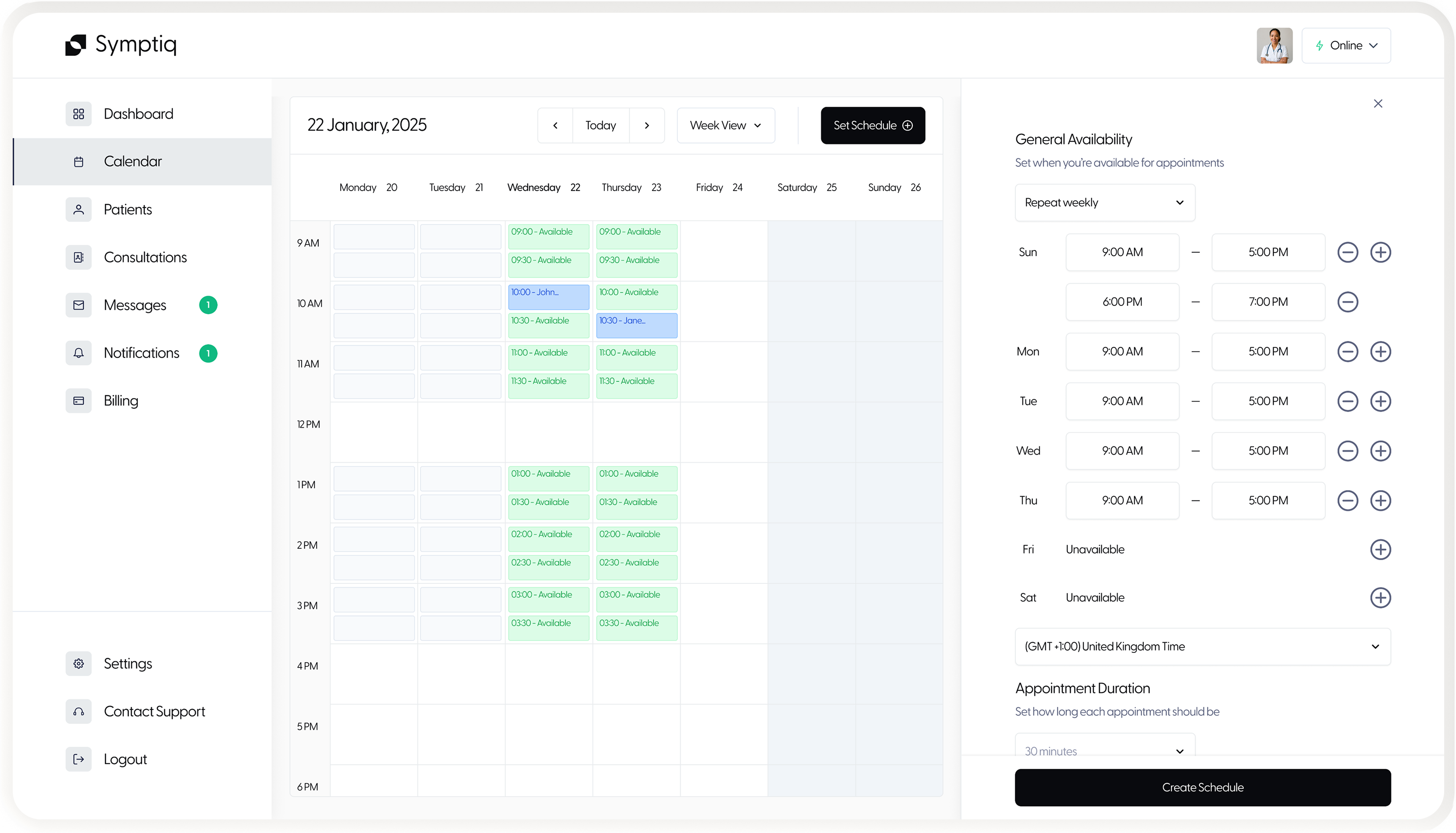
Empowering clinicians with streamlined workflows
The provider workspace prioritized efficiency without sacrificing clinical context. Information was structured around real consultation workflows, allowing doctors to spend less time navigating interfaces and more time focused on patient care.
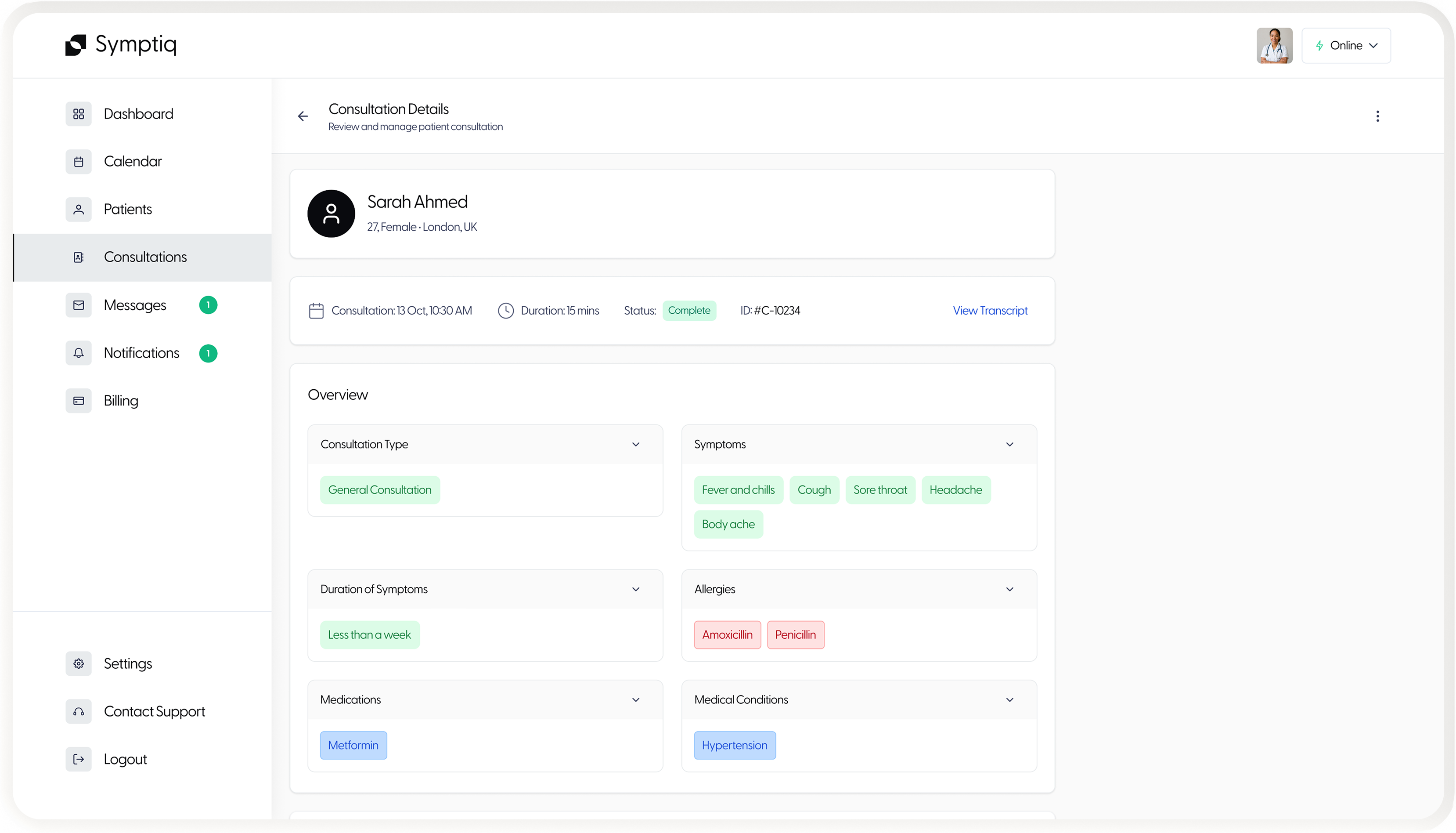
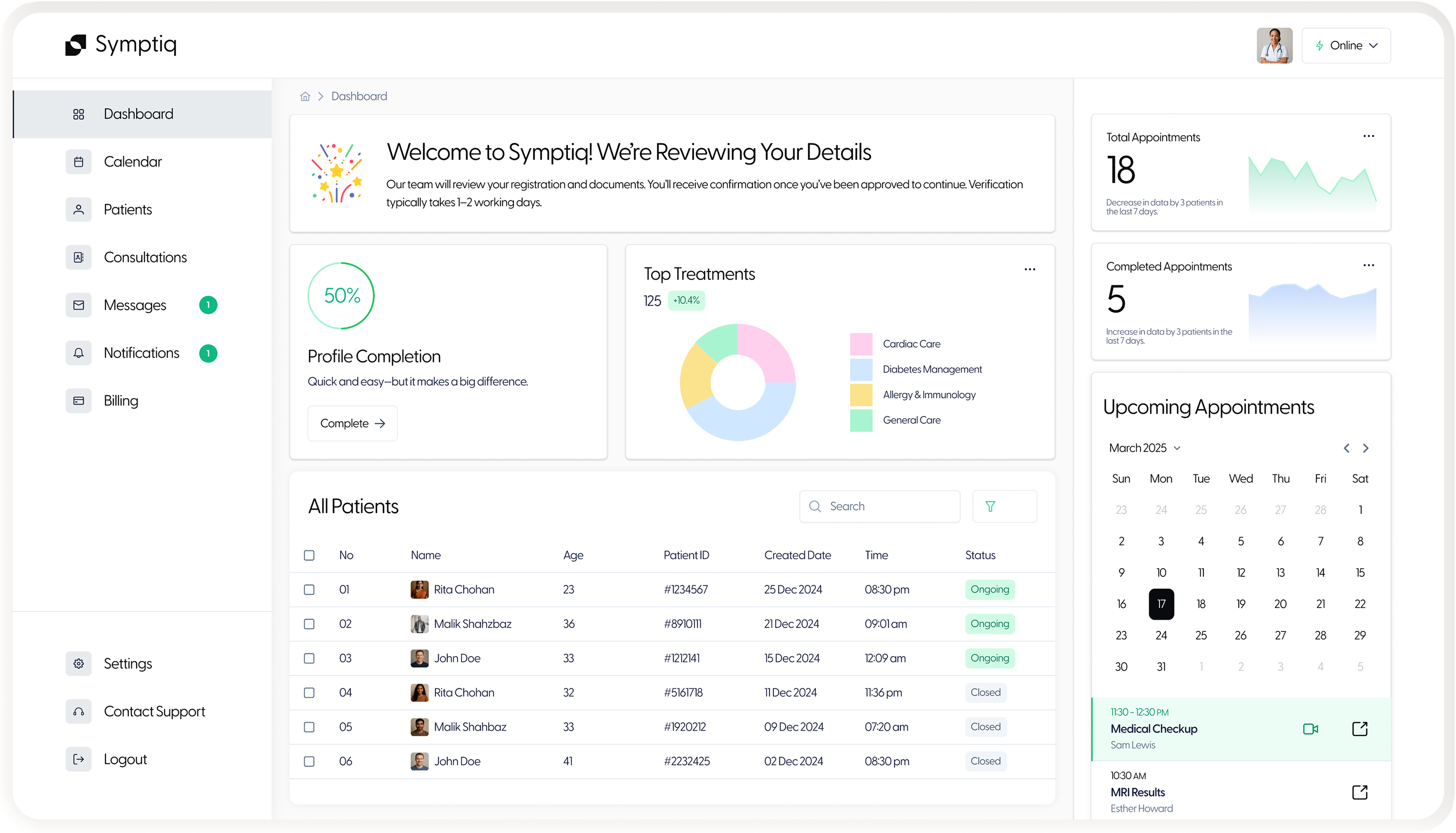
Designing through iteration
Weekly design reviews with the founders challenged assumptions, refined workflows, and continuously reshaped the MVP as product priorities evolved.
Toggle to compare
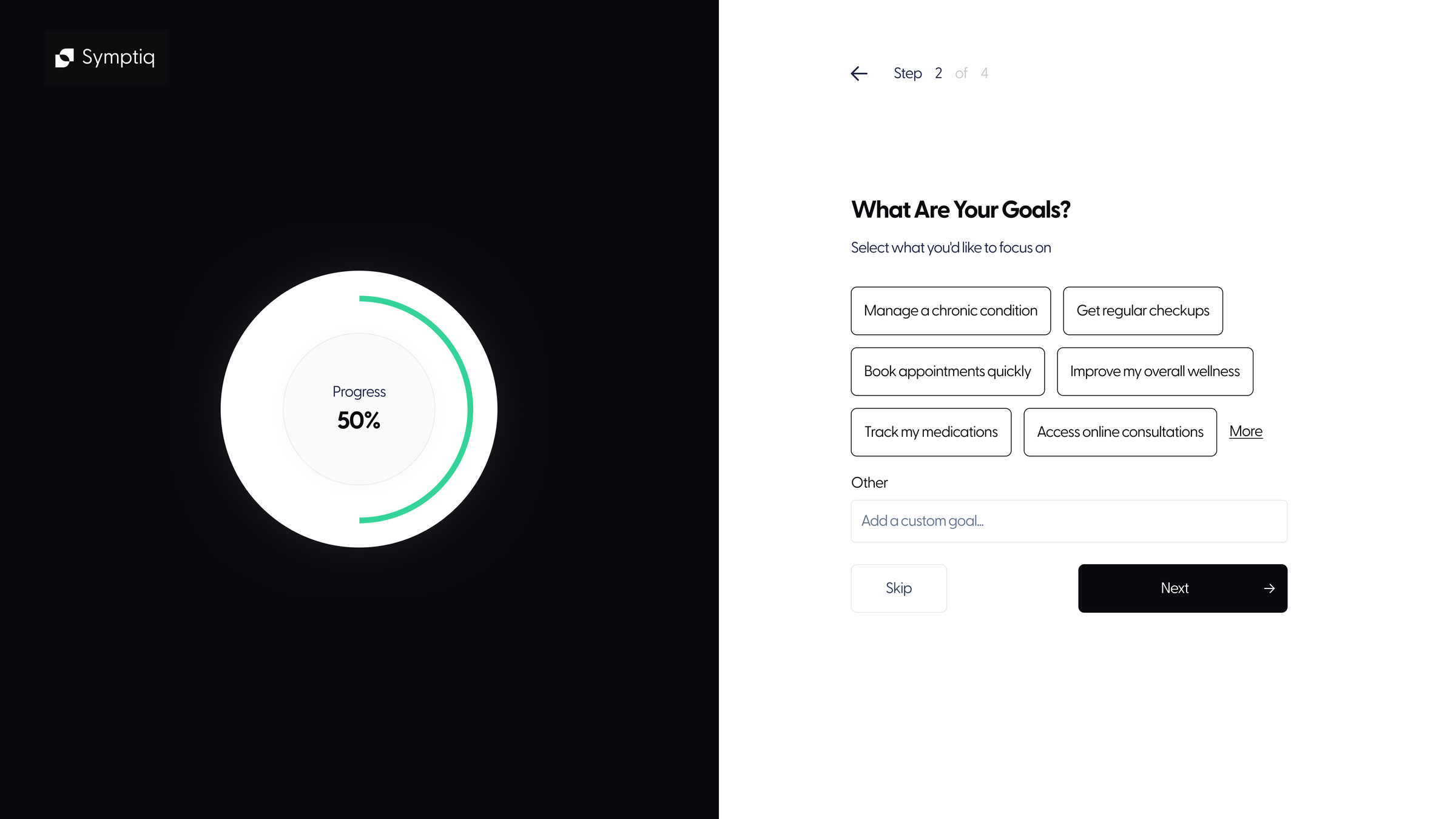
Toggle to compare
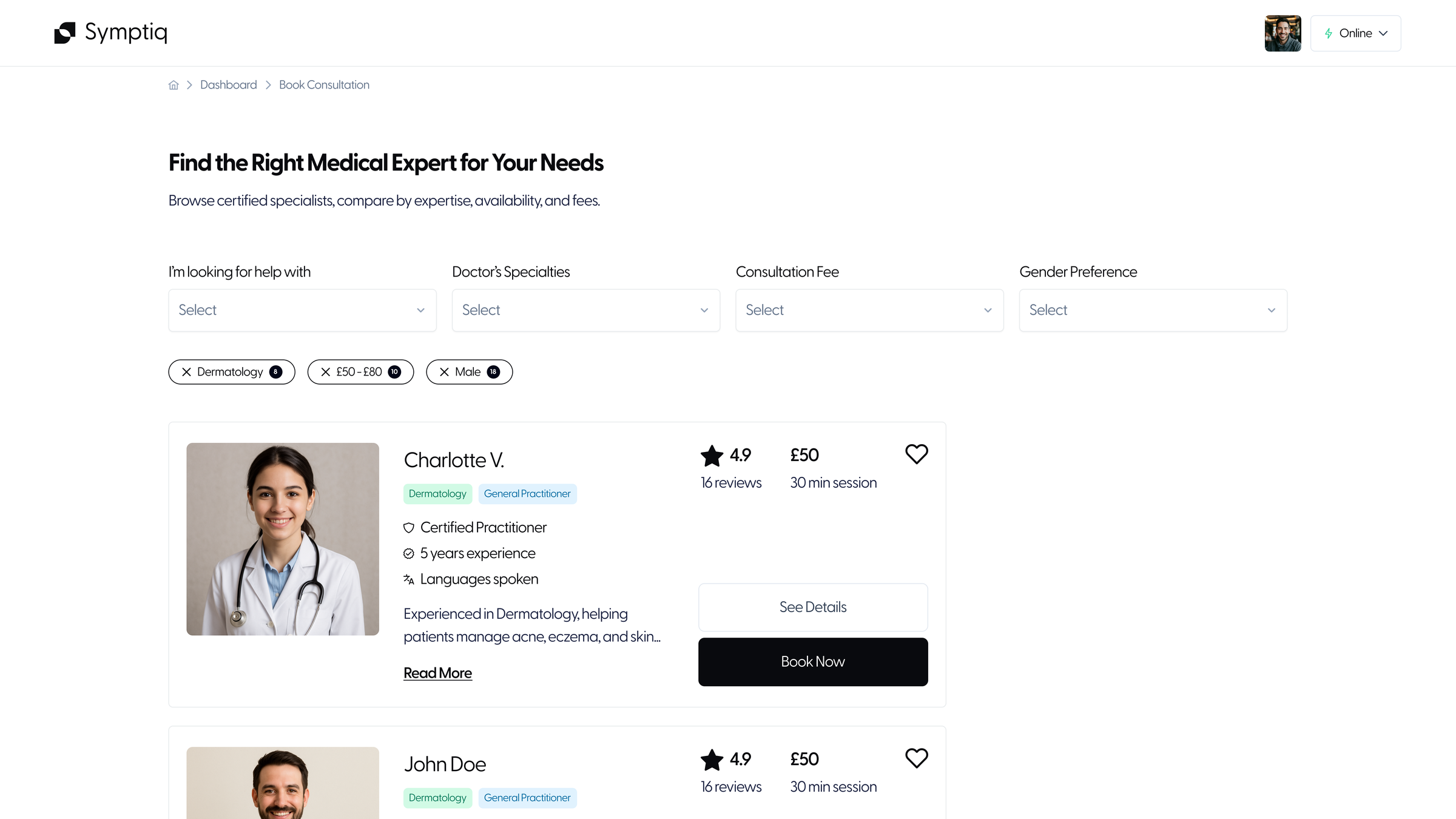
Toggle to compare
Toggle to compare
Designed for every screen
Key workflows were optimized for both desktop and mobile, ensuring the experience remained intuitive whether managing care at a desk or on the go.
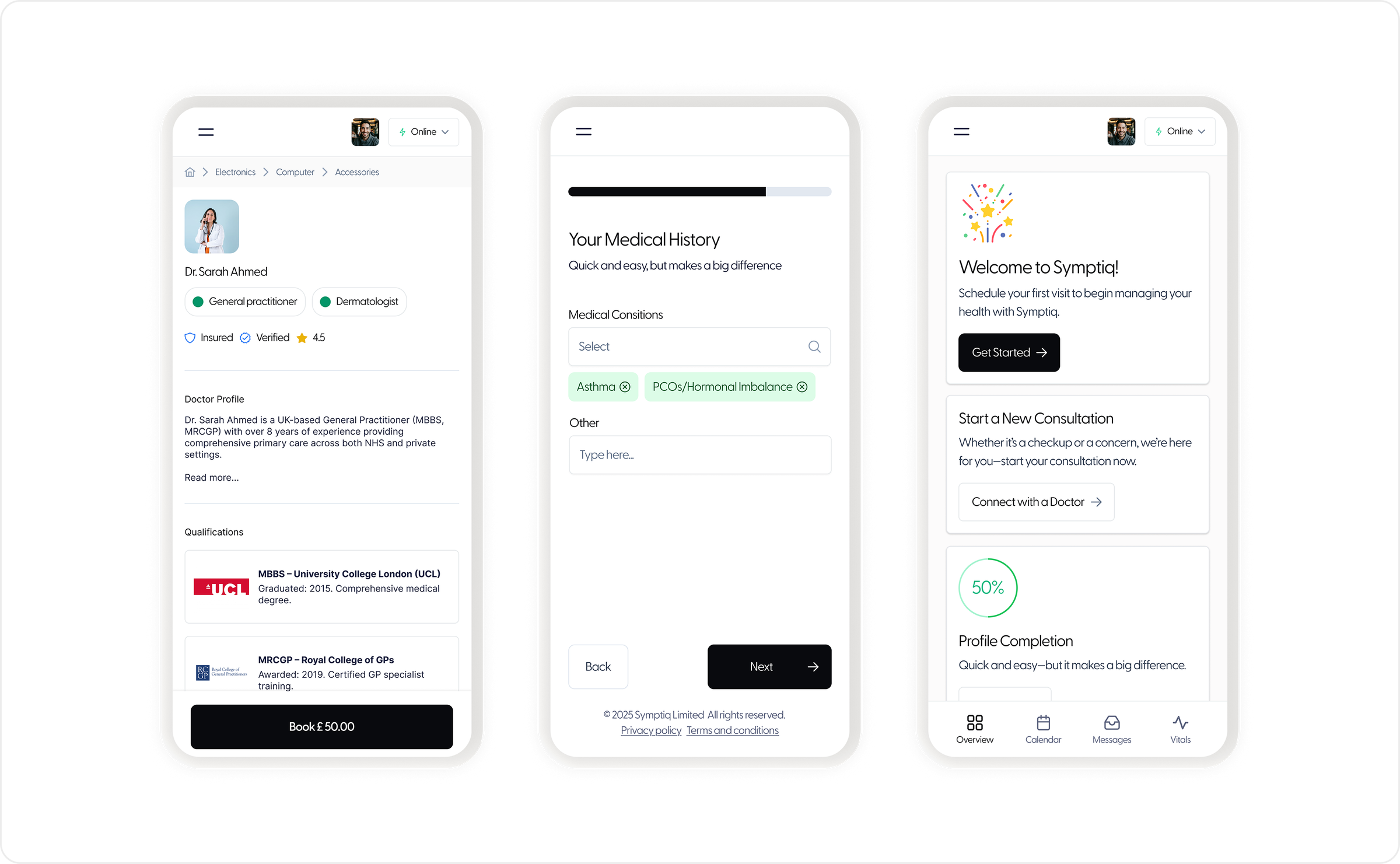
Booking, onboarding, and the patient dashboard — three core flows rebuilt for a mobile-first experience.
Outcome
Transforming an idea into a product foundation.
By the end of the project, Symptiq had evolved from an early-stage concept into a connected healthcare MVP. My design included patient and provider experiences, AI-assisted consultation notes, responsive marketing pages, clickable prototypes, a reusable design system, and developer-ready handoff files.
thanks for reading ✿
Up next
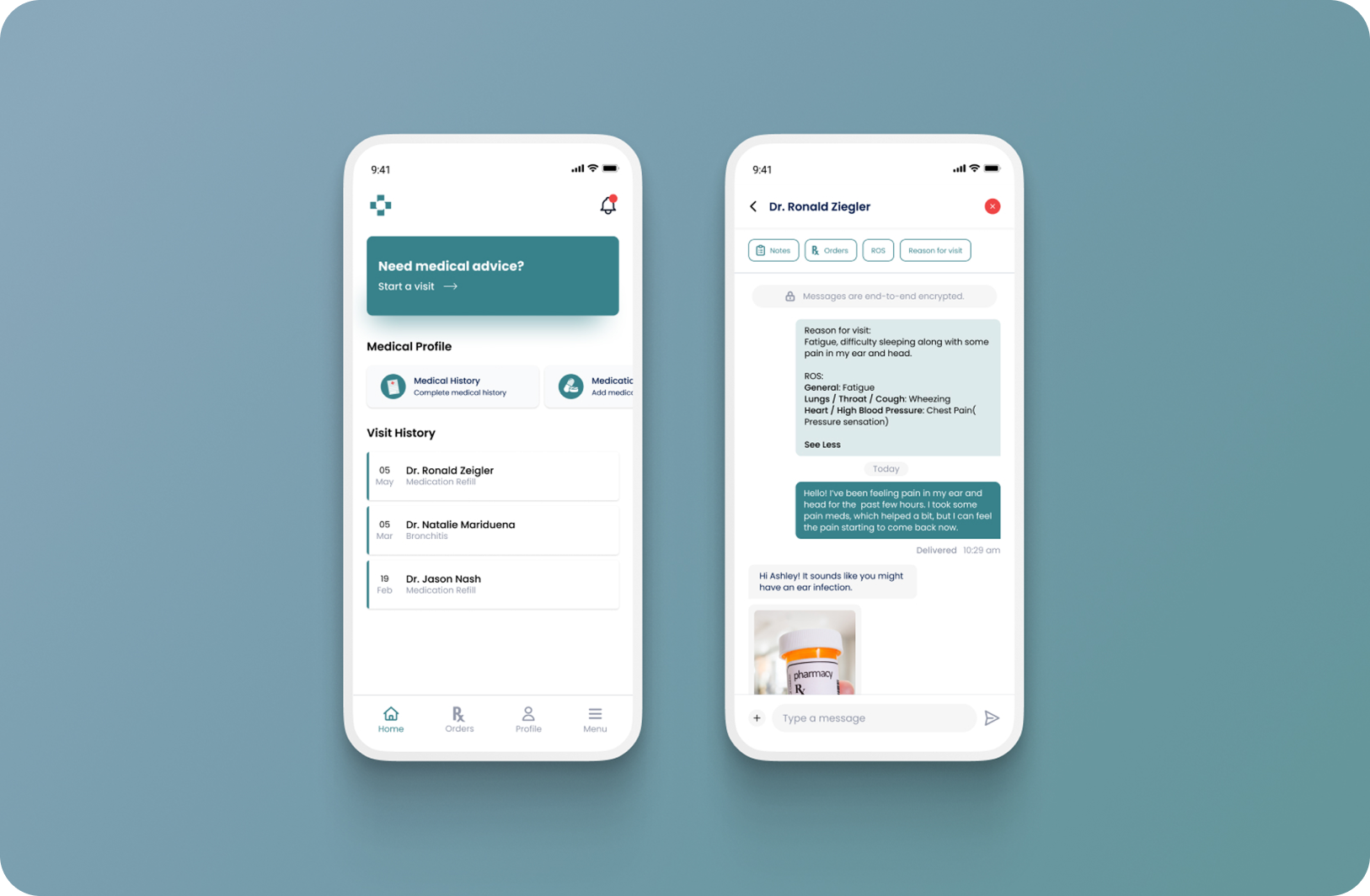
InstaCured
Telehealth platform that connects patients and providers through paired apps and a lightweight EHR.
See work →